The legal showdown over the alleged GHS49 million theft and misappropriation case involving former National Signals Bureau Director-General Kwabena Adu Boahen has escalated, as his lead counsel, Samuel Atta Akyea, launches a strong critique of the prosecution’s strategy and maintains his client’s innocence.
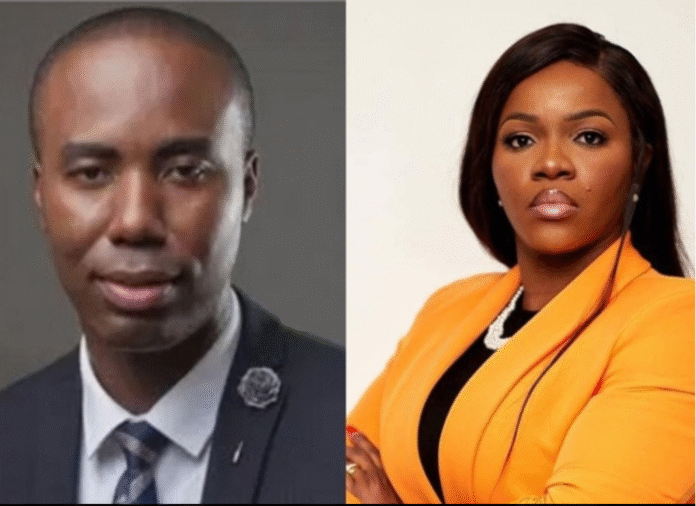
The case, which has drawn widespread national attention due to both its magnitude and the prominence of the accused, centers on claims that Adu Boahen, his wife Angela Adjei-Boateng, and their company, Advantage Solutions Limited, orchestrated a scheme that led to the loss of about GHS49 million (approximately $3.8 million) in state funds between 2019 and 2021.
According to the Economic and Organised Crime Office (EOCO), financial crimes continue to pose a serious threat to Ghana’s public sector, with losses exceeding GHS330 million over the past five years.
Third Accused Discharged Amid Legal Tensions
In a major development, the prosecution led by Attorney General Dr. Dominic Ayine secured a High Court order on Friday, October 17, to withdraw all charges against Mildred Donkor, the third accused. Donkor, who had been standing trial alongside Adu Boahen and his wife, is now expected to serve as a key prosecution witness after reportedly cooperating with investigators.
The withdrawal, executed under Section 59 of the Criminal and Other Offences (Procedure) Act), 1960 (Act 30), has sparked heated exchanges in court. While the Attorney General’s office described the move as a strategic decision, Atta Akyea’s legal team objected, arguing that such a major procedural change required a formal motion and greater transparency.
However, Justice John Nyadu Nyante, who presided over the case, dismissed the objection and upheld the Attorney General’s decision, ruling that it was within the bounds of the law. Donkor’s upcoming testimony is now expected to play a crucial role in shaping the prosecution’s case.
Atta Akyea Challenges Prosecution: “What They’re Trying to Hide Will Set Us Free”
Despite the ruling, Samuel Atta Akyea has intensified his criticism of the prosecution, accusing the state of withholding evidence that could clear his client.
“We are fortified that our client is very innocent, but we will fight on. I am sure another forum will compel the disclosures to come to us so we can do a good job—because these are the weapons of our warfare,” Atta Akyea told Citi Eyewitness News.
He further alleged a lack of transparency in the prosecution’s approach, stating:
“What they are trying to hide is what will set us free.”
The defence has long argued that the state has not provided full disclosure of evidence as required under Ghana’s 1992 Constitution and the Criminal Offences (Procedure) Act, both of which guarantee an accused person’s right to a fair trial.
Legal Experts Offer Perspective
Legal analysts note that while it is common for prosecutors to withdraw charges against one accused in exchange for testimony, such actions must be balanced with the rights of co-accused individuals.
According to Transparency International’s 2024 Corruption Perceptions Index, Ghana ranks 70th out of 180 countries, underscoring continuing concerns about judicial transparency and accountability.
Although Section 59 of Act 30 grants the Attorney General discretion to drop charges before judgment, legal experts stress that this power must be exercised with fairness and transparency, especially in high-profile cases involving public funds.
Defence Plans Further Legal Action
Undeterred by the court’s decision, Atta Akyea has indicated that the defence intends to pursue additional legal remedies, including appeals or applications to higher courts to compel the release of the allegedly withheld evidence.
He expressed confidence that a full disclosure would ultimately vindicate Adu Boahen, insisting that “the truth will eventually come out.”
The case, which continues to attract intense public and media scrutiny, is expected to resume soon with Mildred Donkor’s testimony. For now, the fierce courtroom exchanges highlight the ongoing tension between the demands of justice, prosecutorial discretion, and the right to a fair trial in Ghana’s fight against financial crime.