
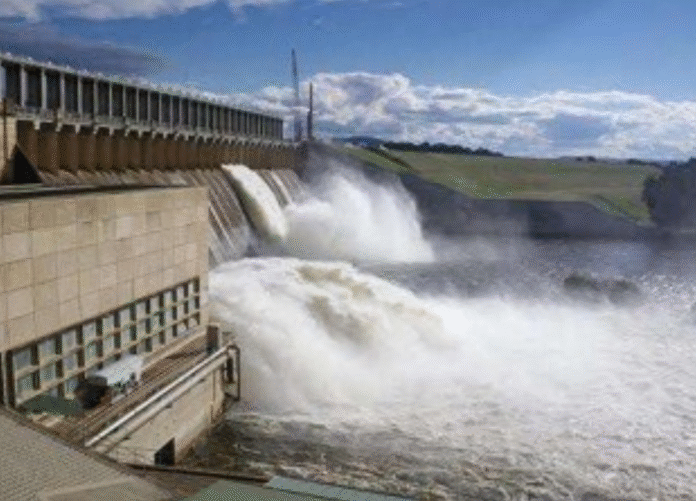
Farmers and communities along the White Volta River basin are bracing themselves for the annual spillage of the Bagre and Kompienga Dams in Burkina Faso, now scheduled to begin on Monday, August 25, 2025, two days earlier than originally announced.
The abrupt change in schedule has triggered fear and anxiety among residents, many of whom fear for their crops, livelihoods, and farmlands.
Speaking to reporters, Mr. Samuel Azure, a farmer in the Binduri District, lamented the short notice:
“The notice is too short. We received the information only a few days ago. Initially, the spillage was scheduled for August 27, but suddenly it was moved to August 25, and we got the news just last Saturday.”
He noted that many farmers have yet to harvest their crops, particularly maize and naara (early millet), warning that the flooding could worsen economic hardship and trigger food insecurity if the destruction is severe.
The announcement was made by SONABEL, Burkina Faso’s power producer and manager of the dams, citing a rapid rise in water levels.
According to Ghana’s Water Resources Commission, as of Saturday, August 23, 2025:
- The Bagre Dam was at 90.24% capacity (234.27 metres), just 0.73 metres below maximum retention.
- The Kompienga Dam stood at 177.90 metres (79.36% capacity), about 2.10 metres below its normal retention level.
Over the years, the Bagre Dam spillage has caused widespread flooding downstream in Ghana, particularly in the Upper East and North East Regions, leading to loss of lives, destruction of farmlands, death of livestock, and property damage.
In the Upper East Region, the annual overflow typically affects districts such as Binduri, Bawku West, Garu, Bawku Municipal, Tempane, Talensi, and Nabdam, where farmers cultivating rice, maize, millet, and vegetables are the hardest hit. Many lose hectares of farmland, suffer displacement, and face worsening food insecurity.
Mr. Jesse Kazapoe, Head of the White Volta Basin at the Water Resources Commission, urged residents to relocate to higher grounds for safety:
“We have sent out information, educating farmers to move to high grounds so we can prevent loss of lives, but we cannot guarantee that food crops will not be lost since some farmers are still harvesting.”
Mr. Isaac Pabia, Upper East Regional Focal Person and National Secretary of the Peasant Farmers Association of Ghana (PFAG), described the annual losses as unacceptable, stressing the need to enforce buffer zones along water bodies to prevent farming too close to the riverbanks.
Meanwhile, Mr. Christopher Beokena, Deputy Regional Director of NADMO (Upper East), said district directors had been instructed to sensitise farmers on the upcoming spillage and precautionary measures.
“Some farmers have already started harvesting, even though some crops are not yet mature. We will continue to monitor the situation and provide the necessary assistance,” he assured.
stay tuned for more.