The International Monetary Fund (IMF) has advised Ghana to record the losses incurred under its Gold for Reserves (G4R) programme on the national budget’s balance sheet, rather than allowing the Bank of Ghana (BoG) to absorb the costs.
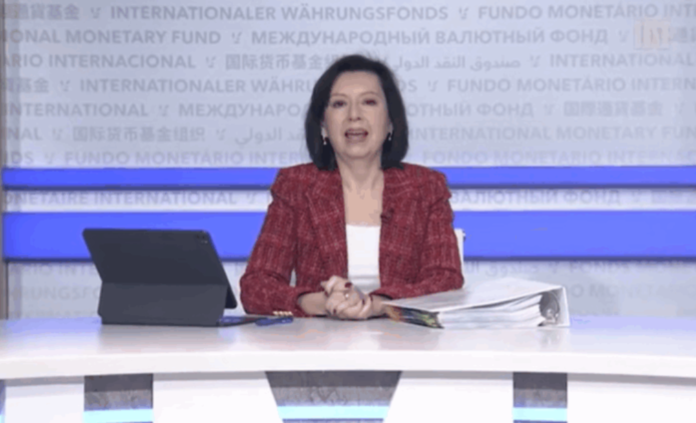
Speaking at a press briefing on Thursday, IMF Director of Communications Julie Kozack stressed the need for the losses to be treated as a fiscal matter. “We strongly recommend that the losses be brought onto the national balance sheet instead of remaining on the central bank’s balance sheet,” she said.
Ms Kozack also called for greater transparency, stronger governance, and improved risk management, particularly within the Gold Board (GoldBod)-linked channel of the domestic gold purchase programme.
According to the IMF, Ghana recorded losses of approximately US$214 million through the end of the third quarter, largely arising from the artisanal and small-scale mining (ASM) doré gold transactions under the G4R programme. These losses stemmed from trading activities, fees, and exchange rate movements.
The development has sparked concern, prompting the Governor of the Bank of Ghana to call for a national response to address the losses and enhance efficiency. The government has since assumed responsibility for the costs incurred under the programme.
Explaining the IMF’s recommendation, Ms Kozack noted that shifting the losses to the national budget would help safeguard the central bank’s ability to fulfil its core mandate of maintaining price stability. “This is about moving quasi-fiscal activities onto the budget balance sheet to ensure transparency and allow the Bank of Ghana to focus on its mandate,” she said.
She added that the IMF’s Staff Report for Ghana’s Fifth Review acknowledged that the G4R programme contributed to the accumulation of international reserves and helped ease pressure on the foreign exchange market during a challenging period for the country.
On Ghana’s ongoing US$3 billion IMF-supported programme, Ms Kozack said the Executive Board had approved a three-month extension to provide adequate time to complete the final review, including assessments of end-2025 data and first-quarter 2026 performance.
Meanwhile, Bank of Ghana Governor Dr Johnson Pandit Asiama, appearing before Parliament’s Public Accounts Committee on Monday, reaffirmed the relevance of the G4R programme. He said the initiative was introduced to address national challenges and should be reformed rather than discontinued.
“The Gold for Reserves programme remains relevant. Its goal is to build reserves, and the evidence suggests the focus should be on improving efficiency and eliminating inefficiencies, not shutting it down,” he said, adding that some charges had already been reduced and further reforms were underway.