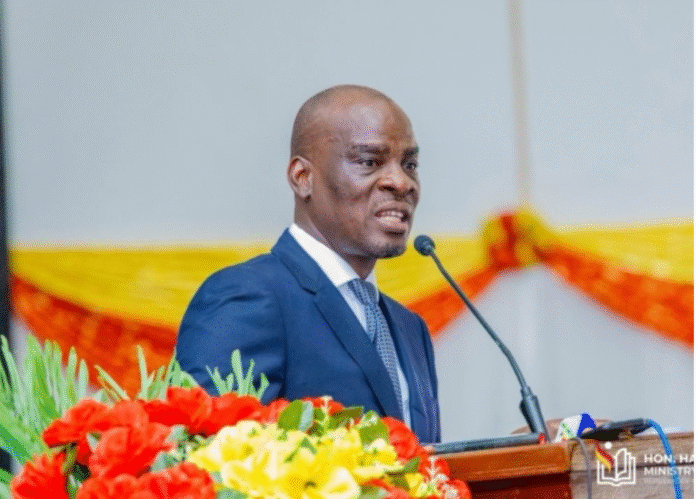
The Minister for Education, Haruna Iddrisu, has announced plans to amend the Ghana Tertiary Education Commission (GTEC) Act, 2020 (Act 1023) to extend the deadline for tertiary institutions to obtain a Presidential Charter.
This decision follows GTEC’s February 2024 directive, which gave all universities a six-month ultimatum to secure a charter or risk closure. The move sparked widespread debate over the credibility of certificates from unchartered institutions and the high cost of meeting charter requirements.
Appearing before the Public Accounts Committee (PAC) of Parliament, Mr. Iddrisu said the government is reconsidering the policy to prevent the closure of universities that cater to thousands of Ghanaian students.
“Government is reviewing that position, and there may be a policy review to extend the moratorium. We must ensure that every qualified Ghanaian student has access to tertiary education,” he stated.
The Minister cautioned that strictly enforcing the law could deny many eligible students the opportunity to pursue higher education.
“They would be unfairly disadvantaged if we applied the regulation too rigidly. While the law must be respected, I intend to seek a review to extend the period for securing charters and to learn from international best practices — such as how private universities operate alongside public ones in Australia, the US, and the UK,” he explained.
Mr. Iddrisu also expressed satisfaction with the growing number of young Ghanaians pursuing higher education, describing the trend as a positive sign for national development.
“The encouraging part is that more young Ghanaians are accessing higher education, and that’s good for our nation,” he said.
On concerns about GTEC’s enforcement of the law, the Minister said the Commission was acting within its mandate but assured that the issue is under thorough review.
“This matter is being carefully examined. The Director-General of GTEC is acting in line with the law, and I am awaiting a report from the GTEC Council for briefing. I will return to Parliament with further details once I receive it,” he noted.
He acknowledged that several private and faith-based universities face operational and financial challenges in meeting the charter requirements.
“For instance, if a university offers programmes in biology or chemistry but lacks the necessary laboratories, GTEC cannot approve such activities,” he pointed out.
Mr. Iddrisu stressed that while academic standards must remain high, institutions should be given more time and flexibility to comply with the requirements.
“Many of these institutions including those run by churches such as the Catholic, Pentecostal, and Presbyterian denominations are making valuable contributions to higher education. We should support them by allowing reasonable time to meet the standards,” he said.
He concluded by emphasizing that although the government will not compromise on quality, universities will be given the opportunity to justify their investments and the training they provide.
“Standards will not be compromised, but we must give them the time and space to demonstrate the value of their work and the quality of education they offer,” he added.