
The lead investigator into the August 6 helicopter crash, Captain Paul Forjoe, has disclosed that poor weather conditions were a major factor in delaying the Z-9 helicopter’s departure by about an hour.
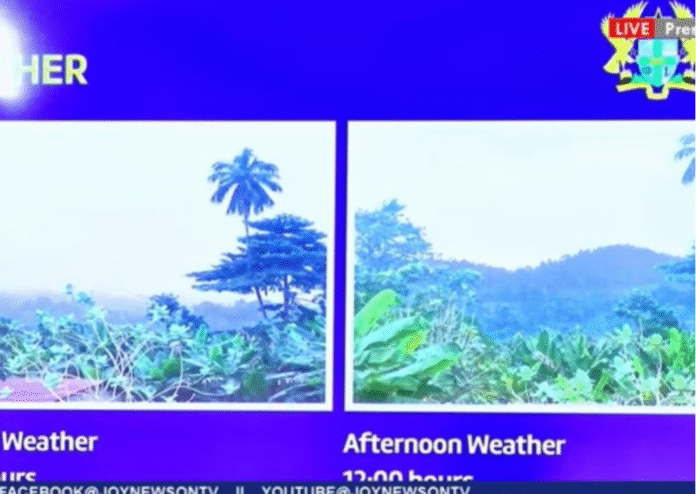
Originally scheduled to depart at 8:00 a.m. for a 50-minute flight, the helicopter’s takeoff was postponed due to unfavourable weather in Accra, Kumasi, and Obuasi. It eventually took off at 9:12 a.m.
Presenting the official findings of the investigation on Tuesday, Capt. Forjoe explained that visibility across southern Ghana was severely limited on the morning of the crash because of mist, drizzle, and low clouds.
“On the day of the flight, weather conditions were significantly worse than usual. Eyewitnesses reported visibility dropping to as low as 200 meters at some points,” he stated.
He added: “In Accra, visibility was between five and seven kilometres, with very low clouds forming just 700 to 1,100 feet above the ground. The poor conditions caused the one-hour delay.”
While the weather improved slightly later in the morning, much of the early flight was affected by haze and overcast skies. According to Capt. Forjoe, the conditions deteriorated further along the route, with drizzle reducing visibility to around four kilometres and low clouds hanging between 600 and 900 feet.
At the time, only Accra and Kumasi aerodrome weather reports were available to the pilots, leaving them without official weather data for much of their route.
Witnesses from Brofoyedru and nearby communities also reported heavy fog and rainfall, which further reduced visibility around the crash site.
Capt. Forjoe noted that the challenging terrain — a forest reserve characterized by steep hills and mountains — intensified the flying difficulties.
“The environmental conditions in the forest reserve, with its hilly and mountainous landscape, can create turbulence, downdrafts, and other dangerous atmospheric effects,” he said.
He concluded that a sudden and powerful downdraft was the immediate cause of the catastrophic crash.
The tragic incident on August 6 claimed the lives of eight distinguished individuals, including senior government officials and crew members.
Those who died were: Flying Officer Manaen Twum Ampofo; Dr. Edward Omane Boamah, Minister for Defence; Dr. Ibrahim Murtala Muhammed, Minister for Environment, Science and Technology; Muniru Mohammed Limuna, Acting Deputy National Security Coordinator; Dr. Samuel Sarpong, Vice-Chairman of the National Democratic Congress (NDC); Mr. Samuel Aboagye, former parliamentary candidate; and Squadron Leader Peter Bafemi Anala.