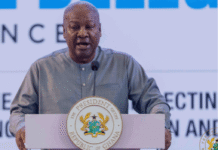
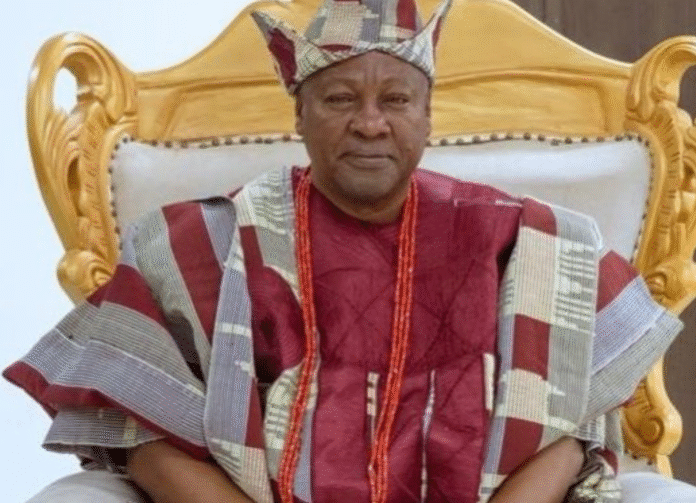
Former UT Bank founder and ex-CEO, Captain (Rtd) Prince Kofi Amoabeng, has cautioned that President John Mahama’s humane and easygoing leadership style could become a liability if it is not matched with firmness and strict sanctions.
Speaking on Joy News’ AM Show, Prince Amoabeng described President Mahama as a genuinely caring and well-intentioned leader, noting his humility and respect for people.
“He is quite humane. He takes the general road, has humility, and truly means well. Even his wife reflects those same values,” he said.
He acknowledged that the current administration is making visible economic gains, citing improvements in inflation, the cedi-to-dollar exchange rate, and other key indicators.
“Looking at inflation, the exchange rate, and other indicators, they are doing well,” he noted.
However, Prince Amoabeng said public confidence remains fragile after years of economic hardship under the previous administration, making many Ghanaians cautiously optimistic.
“We’ve been through very difficult times. So even though we want to be optimistic, we are still watching carefully,” he said.
While praising the President’s respectful and people-centered approach, he warned that an excessive desire to please could weaken authority at the highest level of leadership.
“He is easygoing and relates to people without hard feelings. It’s about respecting everybody,” he said, adding that such traits must be balanced with decisiveness.
According to him, presidential leadership requires the courage to enforce discipline, even when it is unpopular.
“He wants people to be happy, and he wants to please them. That can be a problem,” he stated.
Asked whether this could undermine governance, Prince Amoabeng was unequivocal.
“Yes, because sometimes you must be firm enough to say, ‘This is the direction we are going,’ and if you fail to comply, there must be sanctions even if it means sacking,” he said.
He stressed that accountability must come with real consequences, dismissing concerns about public backlash.
“With responsibility comes accountability. Performance must be questioned, and sanctions must be applied,” he emphasized.
Prince Amoabeng also highlighted the urgent need to rebuild strong institutions, particularly the judiciary, which he described as critical to governance and economic growth.
“Rebuilding institutions and making them strong and credible is key,” he said.
He warned that without a respected and functional judicial system, businesses will struggle and investor confidence will remain low.
“Without that, businesses cannot succeed, and investors will not come,” he cautioned.
Drawing lessons from countries such as Singapore, Rwanda, Japan, and China, Prince Amoabeng noted that effective leadership blends compassion with strict accountability.
“They care about their people, but they also demand accountability and apply sanctions. It’s not about hatred; it’s about making systems work,” he concluded.