Passengers in Accra and across the Greater Accra Region are grappling with rising transport costs as commercial drivers and their conductors commonly known as “mates” implement unauthorised and steep fare increases.
The hikes, which have neither been approved by the Ministry of Transport nor endorsed by the Ghana Private Road Transport Union (GPRTU), are being justified by operators as a response to worsening traffic congestion in the capital. This comes despite a significant reduction in fuel prices and the recent appreciation of the cedi economic gains from which commuters say they are seeing no benefit.
“Order from Above”
At several terminals, drivers insist the fare increases are non-negotiable.
“Lately, the traffic has been worrying. We can be stuck for two or three hours. If we don’t increase fares, it goes against us. That is the reason nothing else,” one driver said.
Similar situations have been reported at major transport hubs including Mallam, Kasoa, Madina, Lapaz, Ablekuma and the Central Business District.
Government, GPRTU Push Back
The government has swiftly condemned the unauthorised fare hikes. The Minister of State in charge of Government Communication, Felix Kwakye Ofosu, has urged commuters to refuse paying any fare that has not been officially gazetted.
While acknowledging the challenges faced by transport operators, he warned that unilateral fare increases undermine economic stability and violate agreed regulatory processes.
The GPRTU, meanwhile, says its members are under intense pressure. Although the union has officially called for calm, some local branches argue that delays in reviewing approved fares—amid rising operational challenges—have pushed drivers to act independently to avoid business collapse.
Spare Parts Prices Tell a Different Story
Claims of escalating operational costs have, however, been challenged by the Abossey Okai Spare Parts Dealers Association.
Its chairman, Frank Otchere, disclosed that prices of most spare parts have declined significantly, largely due to the strengthening of the cedi against the US dollar.
“If you look at private vehicles like the Toyota Vitz used by Uber and Bolt, prices have dropped. Batteries and engine oil have also gone down. The dollar is down, so there is no justification for price hikes,” he said.
According to Mr Otchere, the only notable exception involves spare parts for Mercedes-Benz Sprinter buses, which dominate public transport.
“We have challenges with Sprinter buses and the people who sell them. Aside from that, prices across Abossey Okai have dropped,” he noted.
He cited examples including engines dropping from GH¢15,000 to about GH¢10,000, engine oil from GH¢600 to GH¢350, and batteries from GH¢1,700 to roughly GH¢1,000.
Mr Otchere commended the government for stabilising the currency, crediting it for the improved pricing environment.
“Prices have dropped, and we must give credit to the government. They are doing a very good job,” he said.
Calls for Transport Minister’s Removal
The unfolding chaos has triggered sharp criticism from the Concerned Drivers Association, which is calling for the dismissal of Transport Minister Joseph Bukari Nikpe.
The association’s Public Relations Officer, David Agboado, accused the minister of failing to engage transport unions and manage the sector effectively.
“If I’m being honest, the Transport Minister should not be at post again. He must go,” Mr Agboado told JoyNews.
He contrasted what he described as poor performance at the Transport Ministry with perceived improvements at other institutions, including the Ministry of Finance, the Bank of Ghana, the National Petroleum Authority and the Gold Board.
“Fuel prices have dropped from about 17 cedis to between 10 and 11 cedis. So what exactly is the Transport Minister doing?” he questioned.
Commuters Bear the Brunt
For commuters, particularly workers travelling from Dome to the Central Business District, the impact has been severe.
With drivers charging between GH¢2 and GH¢5 above previous fares, daily transport costs have surged by nearly 30 percent and in some cases up to 50 percent.
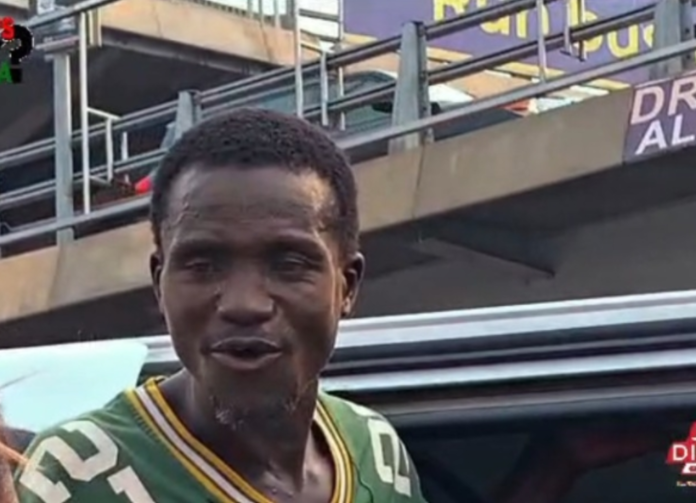
At the Kwame Nkrumah Interchange, frustration and resignation dominate the atmosphere.
One conductor on the Dome bound route told JoyNews on Thursday, January 15, that the decision to increase fares was imposed by vehicle owners and station managers.
“It’s an order from above. Whatever the master says, that’s what we do,” he said.
Drivers cite traffic congestion as the primary cause. A journey from the Interchange to Dome, which should take about 30 minutes, now routinely stretches into several hours.
Call for Enforcement
The GPRTU says it is seeking support from the police and government agencies to curb unauthorised fare increases.
Speaking on Adom FM’s Dwaso Nsem, the union’s Deputy Industrial and Public Relations Officer, Samuel Amoah, explained that the GPRTU lacks authority over non-member drivers.
“We have bylaws, and our members must follow them. But if a driver is not part of the union, we cannot discipline them,” he said.
Mr Amoah stressed the need for stronger government engagement and enforcement, urging drivers outside recognised unions to either join one or formally register associations for regulation.
“The solution lies with the government, MMDCEs and the Road Safety Authority to establish clear rules to control drivers in Ghana,” he added.
As unauthorised fare hikes persist, pressure is mounting on the Ministry of Transport to move beyond statements and deliver enforcement and traffic solutions to stabilise the sector.