
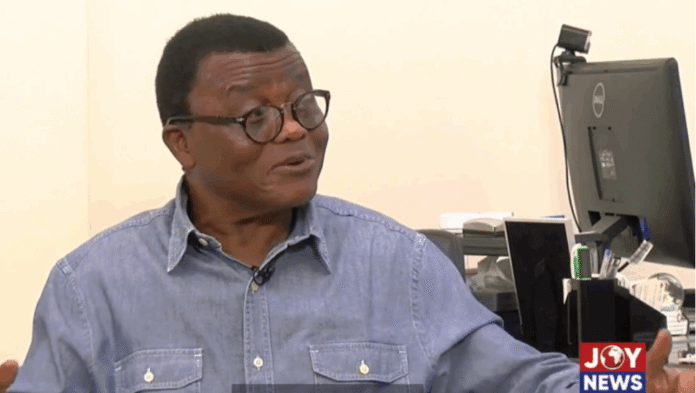
Former United Nations Senior Governance Advisor, Prof. Baffour Agyeman-Duah, has endorsed President John Mahama’s response to the petition calling for the removal of the Special Prosecutor, warning that frequent dismissals of heads of key state institutions could undermine Ghana’s governance stability.
His comments come amid heightened political tension following the removal of the Chief Justice last year and new petitions this year targeting the Electoral Commission Chair and her deputies, as well as the Office of the Special Prosecutor.
Asked whether Ghana could witness more high-profile removals in 2025, Prof. Agyeman-Duah expressed strong reservations, describing last year’s removal of the Chief Justice as deeply destabilising.
“I pray not, because the removal of the Chief Justice really shook the country’s justice system,” he said.
While acknowledging that some arguments were made in favour of the decision, he cautioned against making such actions routine.
“We cannot have a stable government when heads of key governance institutions are changed at will or simply because their conduct is unpopular,” he noted.
He further warned that campaign promises to remove public officials risk entrenching a dangerous political culture, where each incoming government targets office holders it finds inconvenient.
“If we are not careful, this could become part of our political culture, where every new government goes after a particular institutional head for one reason or another,” he said.
Prof. Agyeman-Duah stressed the need to allow the system to stabilise following the Chief Justice’s removal and to objectively assess its impact.
“Now that the removal has taken place and things are settling down, I am waiting to see whether any study will show that public trust in the judiciary has actually increased as a result,” he said. “If that is the case, then I will be happy. We must allow these things time to settle.”
On the petition against the Electoral Commission leadership, he noted that the matter stemmed from political commitments made before the elections.
“Regarding the Electoral Commission, that was a promise the government made when it was seeking power,” he explained.
He criticised former President Nana Akufo-Addo for setting what he described as a negative precedent with the removal of former EC Chair Charlotte Osei, suggesting the current government appears poised to follow a similar path.
However, he urged restraint and called for alternative solutions.
“I hope they find a way to manage this without reinforcing this needless culture of removing heads of institutions,” he said. “Improved regulations, safeguards, and training should be the focus, rather than removal.”
Commenting on the petition against the Special Prosecutor, Prof. Agyeman-Duah commended President Mahama’s intervention.
“For the Office of the Special Prosecutor, the President asked the petitioners to withdraw their request, and I believe that was a very wise decision,” he said.
He urged that the same approach be applied to other petitions currently before the government.
“This President can manage these petitions in a way that promotes stability rather than retaliation,” he stated.
He concluded with a warning against allowing governance to descend into political payback.
“We must avoid turning our politics into an ‘you do me, I do you’ cycle,” he said, expressing hope that Ghana would chart a more stable and mature path.