
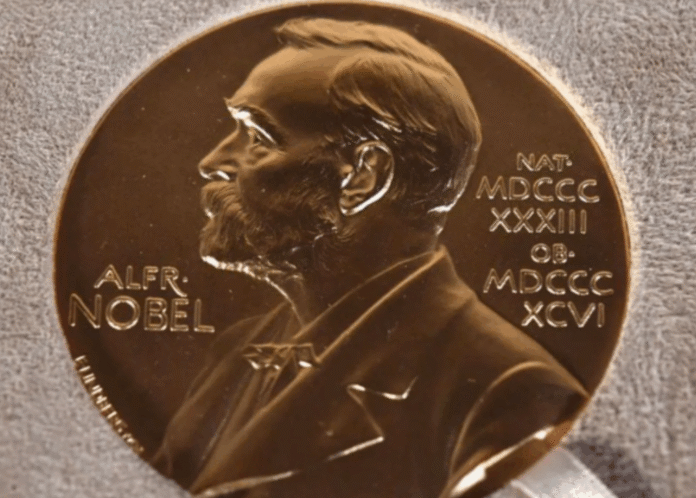
The 2025 Nobel Prize in Physiology or Medicine has been awarded to three scientists whose groundbreaking discoveries explain how the immune system targets harmful infections while sparing the body’s own cells.
The prize is shared by Shimon Sakaguchi of Japan and US researchers Mary Brunkow and Fred Ramsdell. Their work uncovered specialized “security guard” cells regulatory T-cells that prevent the immune system from turning against the body.
Their findings have transformed understanding of immune regulation and opened new paths for treating autoimmune diseases and cancer. The laureates will share a prize of 11 million Swedish kronor (£870,000).
“Their discoveries have been decisive for our understanding of how the immune system functions and why we do not all develop serious autoimmune diseases,” said Olle Kämpe, chair of the Nobel Committee.
The immune system is a powerful defense network that protects us from countless infections. It uses white blood cells equipped with randomly generated receptors created in up to a quadrillion combinations to recognize and attack a wide range of pathogens.
However, this randomness also produces immune cells capable of attacking the body’s own tissues. While some of these harmful cells are eliminated in the thymus, where white blood cells mature, the discovery of regulatory T-cells revealed an additional safeguard: these cells patrol the body and neutralize rogue immune cells that slip through.
When this process breaks down, autoimmune diseases such as type 1 diabetes, multiple sclerosis, and rheumatoid arthritis can develop.
The Nobel panel noted that the discoveries have “laid the foundation for a new field of research” and inspired innovative therapies for instance, reducing regulatory T-cells to boost anti-cancer immunity or enhancing them to curb autoimmune attacks and lower the risk of organ transplant rejection.
Prof. Shimon Sakaguchi, of Osaka University, first demonstrated the concept by studying mice whose thymus glands were removed, leading them to develop autoimmune disease. He showed that transferring immune cells from healthy mice could prevent the condition evidence of a protective immune mechanism.
Meanwhile, Mary Brunkow, at the Institute for Systems Biology in Seattle, and Fred Ramsdell, now at Sonoma Biotherapeutics in San Francisco, studied an inherited autoimmune disorder in mice and humans, leading to the discovery of a key gene crucial for regulatory T-cell function.
Prof. Annette Dolphin, president of the UK’s Physiological Society, praised their contributions:
“Their pioneering work has revealed how the immune system is kept in check by regulatory T-cells, preventing it from mistakenly attacking the body’s own tissues. This is a striking example of how fundamental physiological research can have far-reaching implications for human health.”